





Marriage As A Sacred Social Institution In India
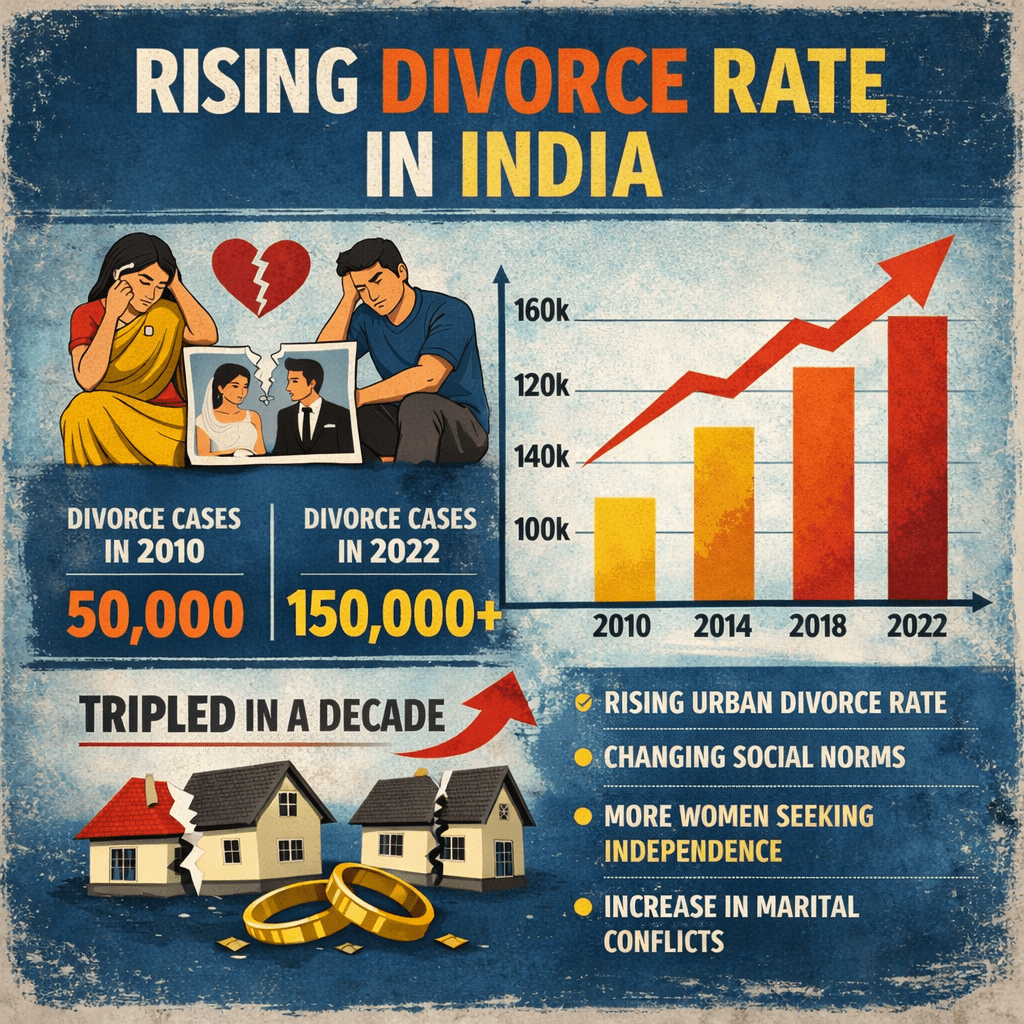
Marriage in India has traditionally been understood not merely as a contract between two individuals but as a sacred, lifelong social institution. The deeply rooted cultural ethos historically discouraged divorce, even in the face of unhappiness or abuse. However, contemporary Indian society is witnessing a gradual shift in marital norms, prompting public debate about the emergence of a so-called “divorce culture.” While statistically India still records comparatively low divorce rates relative to many Western countries, evolving socio-legal patterns point towards a more nuanced and significant socio-legal transformation.
Changing Social Realities
India’s social fabric is rapidly transforming under the influence of urbanisation, education, and economic liberalisation. Younger generations increasingly enter marriage with heightened expectations of emotional compatibility, mutual respect, and personal fulfilment. Unlike previous generations, many are less willing to remain in unsatisfactory marriages solely to satisfy social expectations.
Particularly in urban centres, the gradual transition from joint family systems to nuclear family structures is reducing traditional pressures to “adjust at all costs.” This shift enables individuals to make independent life decisions, including those concerning marital dissolution.
Role Of Women’s Empowerment
A central driving force behind the rising incidence of divorce in India is the growing financial and educational empowerment of women. Historically, economic dependency and fear of social ostracisation forced many women to remain in unhealthy or abusive relationships. In contrast, women today have broader access to higher education and formal employment, equipping them to assert their rights and assert personal dignity.
The legal system in India has also become more responsive to women’s concerns. Judicial recognition of protections related to maintenance, custody, and protection from domestic violence strengthens women’s confidence in seeking legal remedies rather than silently enduring injustice.
Legal Awareness And Access To Family Courts
Increased legal awareness among the general public is another key factor contributing to the rise in divorce proceedings. Matrimonial law frameworks under statutes such as the Hindu Marriage Act and the Special Marriage Act are more accessible through widened legal aid services, mediation centres, and family courts.
The judiciary — through mechanisms such as divorce by mutual consent — acknowledges that compelling incompatible couples to remain married serves neither social nor individual well-being. Courts are increasingly attuned to the psychological health and dignity of spouses, prioritising peaceful and equitable separation over preservation of dysfunctional relationships.
Still No “Divorce Culture” in the Western Sense
Despite these developments, it would be inaccurate to suggest that India has embraced a divorce culture analogous to that of many Western societies. Divorce remains relatively uncommon, especially in rural regions and among older generations.
Social stigma, family expectations, financial considerations, and concerns about children’s well-being continue to act as deterrents against seeking marital disruption.
Key Deterrents to Divorce in India
| Factor | Impact on Divorce Decisions |
|---|---|
| Social Stigma | Fear of judgment and social exclusion discourages couples from seeking divorce |
| Family Expectations | Strong pressure to preserve marriage for familial harmony |
| Financial Considerations | Economic dependence and litigation costs act as barriers |
| Children’s Well-being | Concerns over emotional and social impact on children |
For many couples, divorce is still seen as a last resort rather than a convenient option. Cultural values emphasising endurance, reconciliation, and familial unity remain deeply embedded in Indian society.
Judicial Approach and Social Balance
Indian courts have deliberately adopted a balanced judicial philosophy — neither encouraging divorce indiscriminately nor discouraging it unjustly.
The judiciary recognises that forcing couples to remain in meaningful relationships where they lack emotional connection is neither socially productive nor humane.
At the same time, courts remain vigilant against the misuse of divorce laws by ensuring that financial and custodial responsibilities are equitably determined and that justice is not skewed in favour of one party without legitimate grounds.
Conclusion
The observed rise in divorce cases in India is not indicative of moral decline or cultural degeneration. Rather, it reflects a society in transition, one that increasingly values individual well-being, personal dignity, and equality within marriage.
Although India has not yet developed a divorce culture in the Western sense, the growing openness to marital dissolution highlights a significant socio-legal evolution that balances traditional values with contemporary realities.
Need Expert Property Legal Help?
Connect instantly with a verified property lawyer from your city through LegalServiceIndia.com.
📱 Or WhatsApp 9891244487 for immediate assistance.
